ตัวอย่างสำหรับตรวจทาน ยังไม่ใช่เว็บที่เปิดตัว · Preview for review, not yet launched
ARIES Smart InfrastructureARIES Smart InfrastructureKasetsart
University
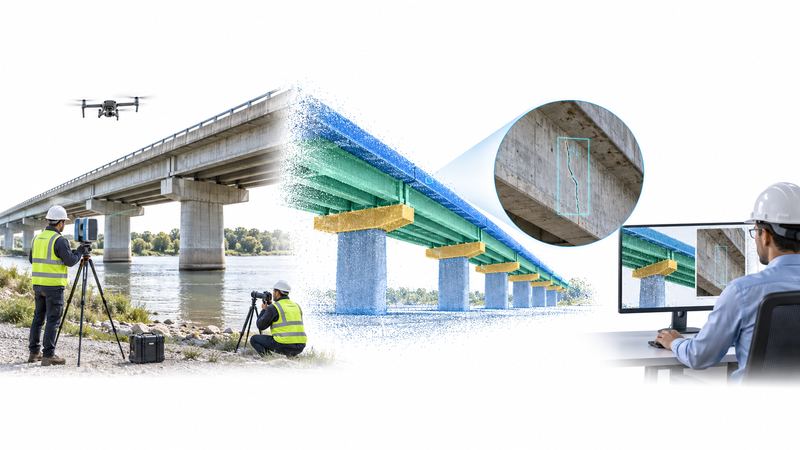
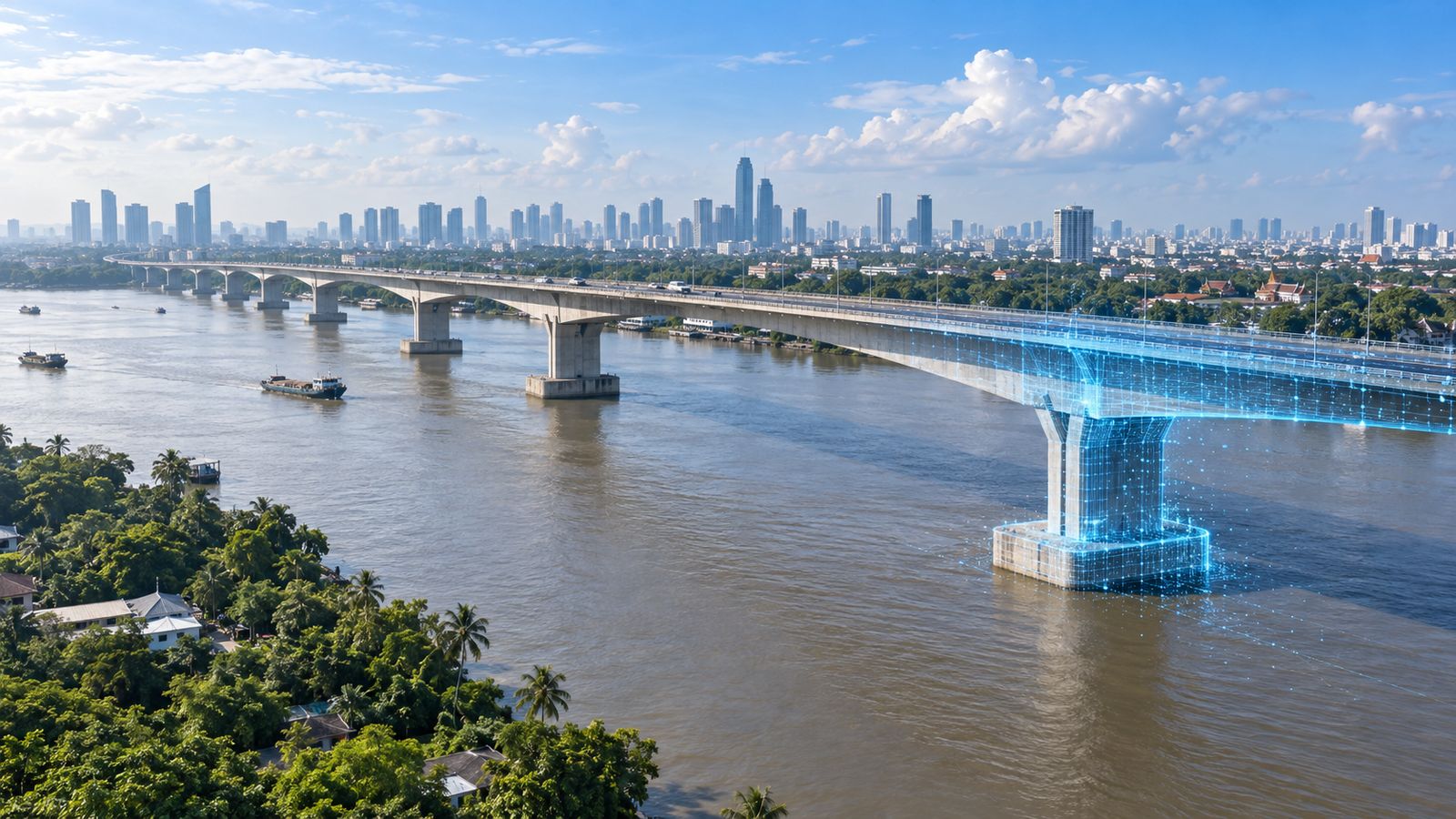
Illustration: a long river bridge, one pier shown as a digital-twin wireframe
ARIES Center

Center of Excellence for Advanced Resilience and Intelligent Engineering of Structural Systems

Department of Civil Engineering · Faculty of Engineering · Kasetsart University

Started2026
Research groups2
FlagshipBridge Intelligence, 2026 to 2028
OfficeRoom 9806, Building 9

ARIES develops AI, digital-twin and field-sensing technologies that turn inspection data into decisions: how to assess, maintain and prioritize the bridges, buildings and other infrastructure Thailand depends on.

Thailand's bridges and elevated roads are many, and they are ageing. Visual inspection alone cannot keep up: it is limited in accuracy, consistency and coverage, and maintenance budgets and inspection engineers are both scarce. Prioritizing repairs across a whole network is hard to do in practice.

Artificial intelligence, unmanned aerial vehicles, LiDAR and digital twins have matured fast. Brought together with structural engineering, they can make inspection, assessment and asset management more accurate, faster and far more complete. ARIES was started in 2026 by faculty of the Department of Civil Engineering at Kasetsart University to bring these strands into one center with one direction.

From the field

Real structures, the problems found, and why they matter.

A bridge with seven decades of service

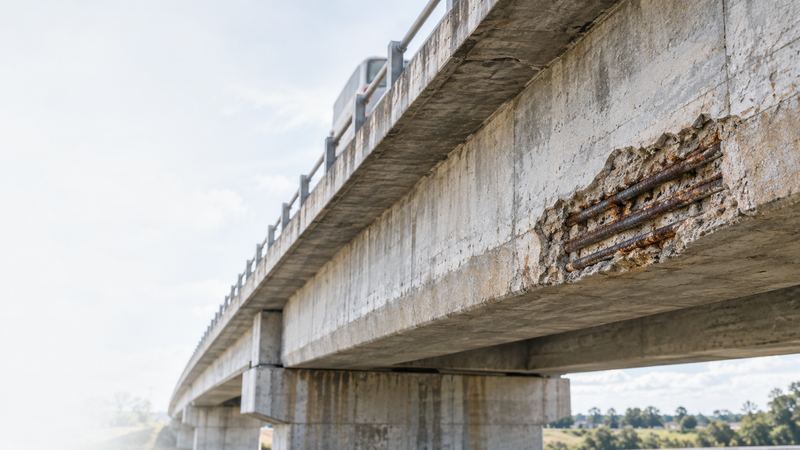
Cracks that may tell a story of fatigue

Joint work with Chulalongkorn University

The problem
An RC bridge that had carried traffic for more than seventy years showed flexural-shear cracks in its girders. Were they the marks of repeated loading, year after year?
What the team did
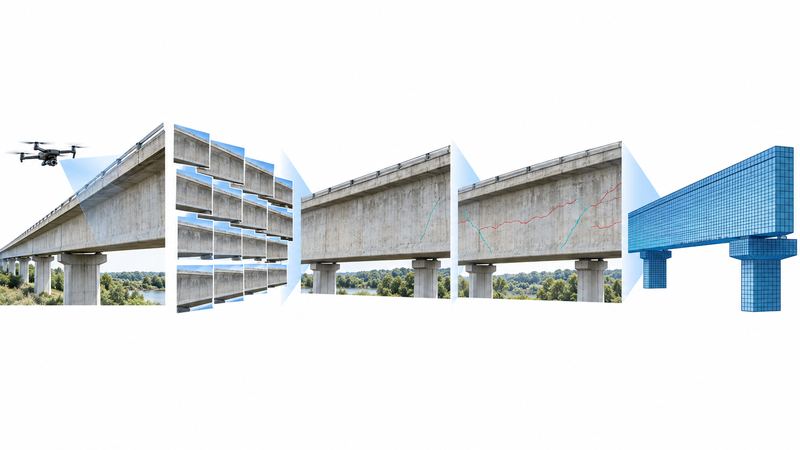
The team surveyed the bridge with a UAV, and the high-resolution images pinned down where each crack was. A nonlinear finite-element analysis following the AASHTO LRFD Bridge Design Specifications then assessed the girders' structural integrity, and the UAV images were used to identify and compare the crack patterns.
Why it matters
Ageing concrete bridges cannot be climbed and hand-inspected often enough. A drone survey that feeds into structural analysis has clear potential to cut inspection time and cost and to make the assessment more precise.
Read the paper →
A balanced cantilever bridge

The bridge was not quite the bridge on the drawings

Joint work with Chulalongkorn University and the Asian Institute of Technology

The problem
Structures are assessed against their design drawings. But after years in service, how close is the real bridge to the one that was drawn?
What the team did
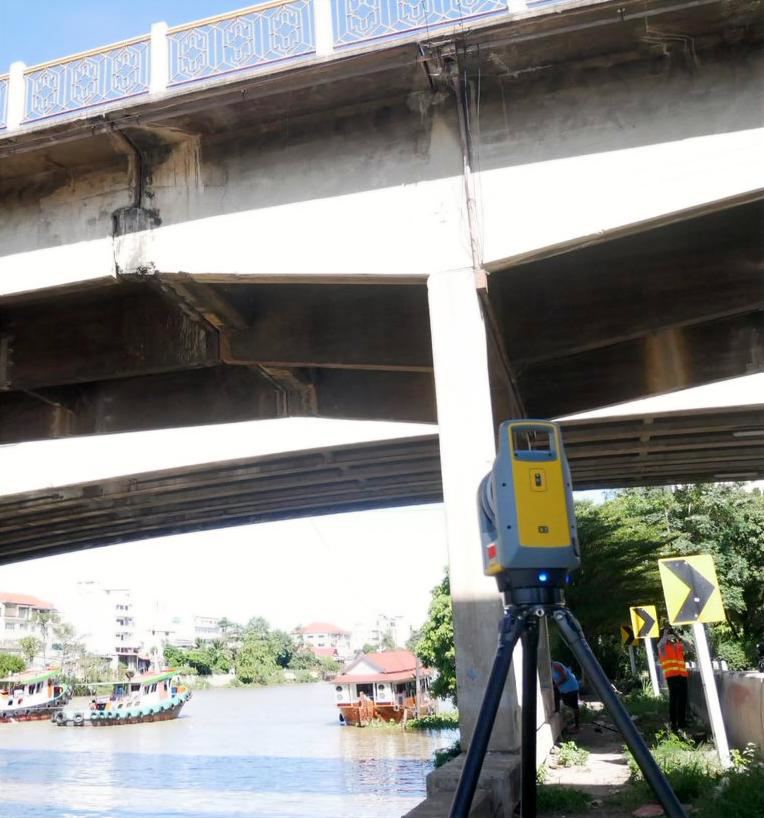
The team scanned the bridge with 3D LiDAR, measured concrete stiffness with ultrasonic pulse velocity, and recorded vibration and dynamic strain under traffic. The point cloud exposed differences between the as-designed and as-built geometry, and a digital twin built on the as-is data reproduced the measured dynamic behaviour.
Why it matters
A twin that matches the real structure is a baseline: future inspections can be compared against it, and changes in dynamic strain or neutral-axis depth become early signs of local damage.
Read the paper →

Where we are going

ARIES is not building a bridge inspection tool. It is building the body of knowledge that connects data, structures and decisions: how what we measure on a structure becomes what its owner decides to do about it.

Mission, road map and how to work with us →

Our work

The center works in four research areas, implemented in phases: two are active today and match the founding groups' expertise, two open as colleagues from related fields join. Across all of them we:

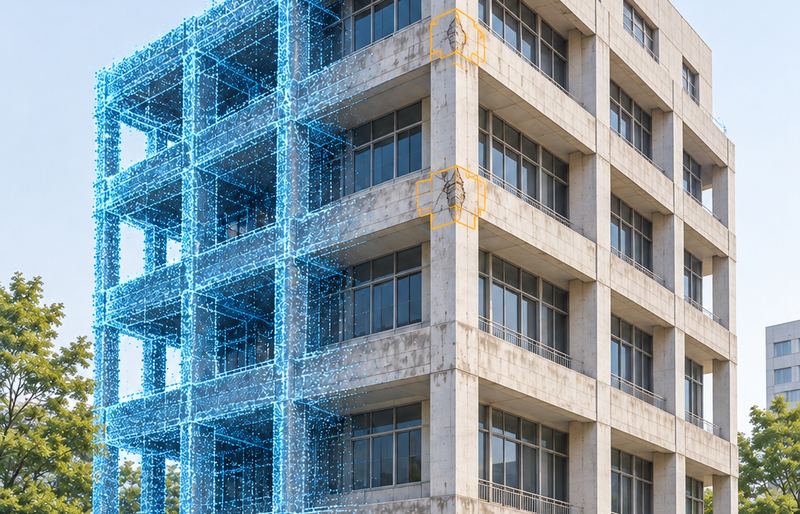
  • Develop AI, digital-twin, UAV and LiDAR methods for inspecting and assessing structures, with autonomous inspection pipelines and computer vision for damage classification.
  • Assess risk and structural reliability under earthquake, deterioration, corrosion and climate change, across the life cycle of a structure.
  • Manage infrastructure systems from the component to the network level: bridges, buildings, dams and transport networks.
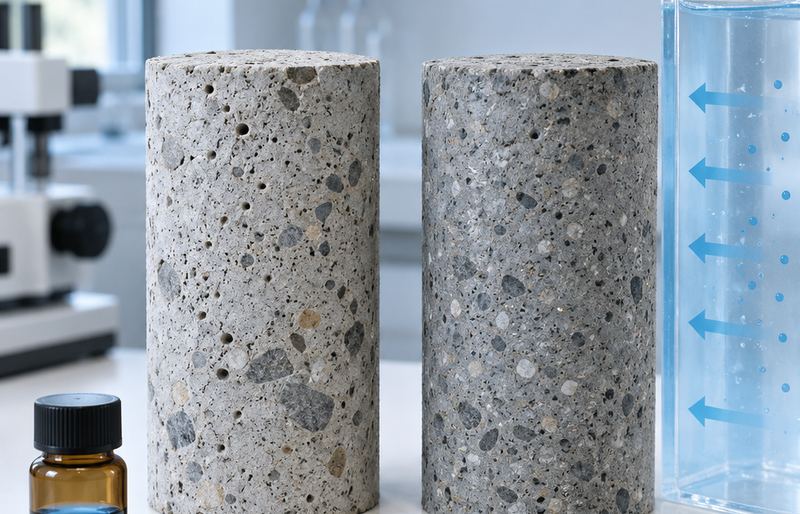
  • Advance durable and low-carbon materials, from graphene quantum dots to ultra-high performance concrete, with computational deterioration modelling.
  • Build data systems and data standards that owner agencies can use directly.
  • Transfer technology through training, seminars and academic services to government, state enterprises and industry.
  • Train the next generation of researchers: undergraduates, master's and doctoral students, with partners abroad.

The problems we work on →

Research groups

Structural Assessment and Digital Twin

Structural assessment, digital twins and deterioration modelling of structures.

Lead: Asst. Prof. Dr. Supasit Srivaranun, Director

Geospatial and Field Operations

Unmanned aerial vehicles, LiDAR and field survey.

Lead: Asst. Prof. Kittipos Prapassorn

Flagship program 2026 to 2028

Bridge Intelligence

One pipeline from survey to decision, designed for the agencies that own and maintain Thailand's bridges. Now at the research stage, tested on a pilot bridge.

Survey→Detect→Model→Assess→Decide

News

ARIES moves into its office, Room 9806, Building 9, Faculty of Engineering
July 2026
Center
NRCT FY2026 project begins: digital twin platform for network-level bridge assessment and management
May 2026
Project

Research themes

Our team

Two founding faculty, a senior advisor, and the students and research staff who do the work.

SS
Asst. Prof. Dr. Supasit Srivaranun
Director · Head, Structural Assessment and Digital Twin
KP
Asst. Prof. Kittipos Prapassorn
Co-founder · Head, Geospatial and Field Operations
SM
Assoc. Prof. Dr. Suphawut Malaikrisanachalee
Senior Advisor

Researcher and student profiles appear here once each person has confirmed.

All people, and how to work with us →

ARIES operates under the Department of Civil Engineering, Kasetsart University. Its formal establishment as a department-level center of excellence is in progress.Room 9806, 8th floor, Building 9, Faculty of Engineering, Bangkok
สีธีม